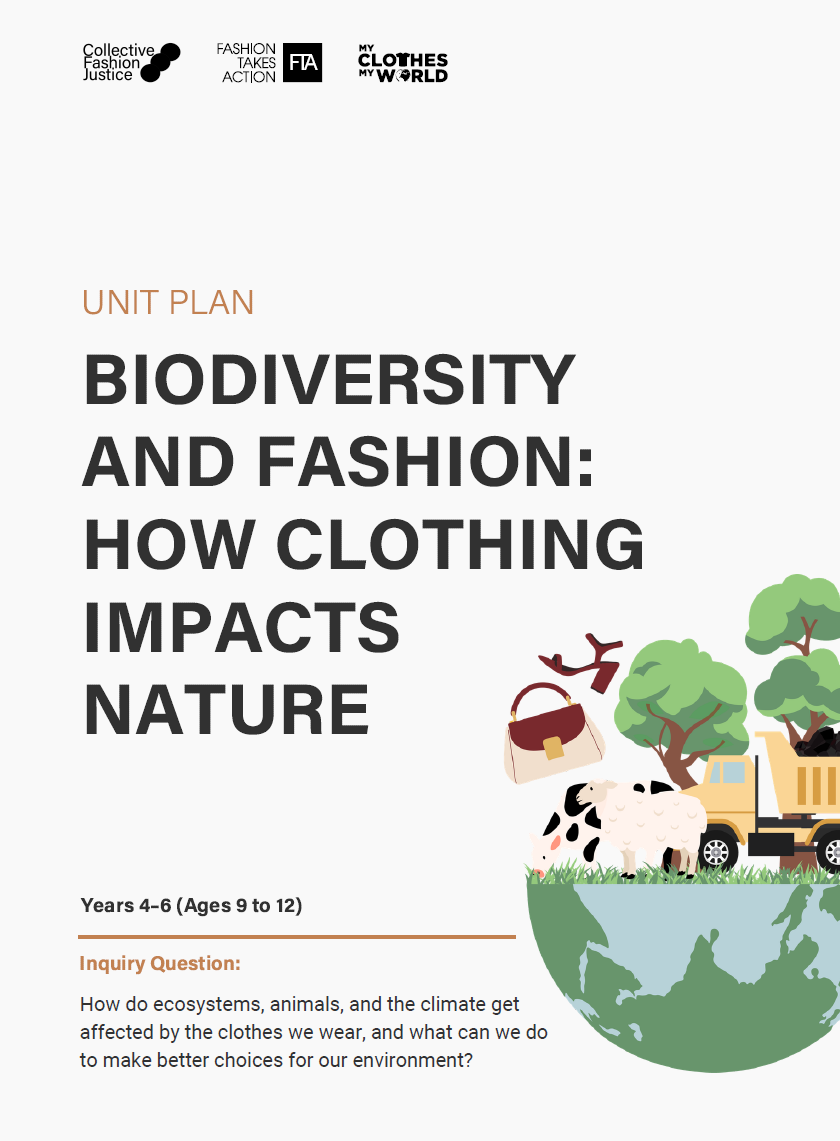
Biodiversity and Fashion:
How Clothing Impacts Nature
A free, expert-developed curriculum that uses everyday clothing as a doorway into biodiversity loss, deforestation, and climate change — for students aged 9-14.
2
curriculum versions — years 4-6 and 7-8
3
topic modules per version, ready to teach
1.3M
Australian students this curriculum could reach
Free
always — for every educator, everywhere
WHAT IT IS
A curriculum built around the clothes on your back
Everyone gets dressed every day. Yet the environmental consequences of what we wear are almost entirely absent from Australian classrooms. This curriculum changes that — using fashion as a concrete, relatable entry point to teach some of the most urgent environmental issues we are facing.
01
How does fashion impact biodiversity and wildlife?
02
What is the connection between fashion, deforestation and land degradation?
03
How does fashion contribute to climate change and how can we make a difference?
WHY IT MATTERS
Australia is one of the world’s biggest consumers of fast fashion.
Our classrooms haven’t caught up.
The fashion industry is responsible for significant biodiversity loss, deforestation, and greenhouse gas emissions — yet it remains largely absent from sustainability education. This curriculum closes that gap.
92M
tonnes of clothing waste produced globally every year
300M
trees logged annually for cellulose-based clothing
80-120B
new garments produced globally every year
80%
Amazon deforestation linked to cattle ranching for leather
“This is not just a sustainable fashion program — it is a climate education program”.
- Fashion Takes Action
WHAT MAKES THIS DIFFERENT
Hope-based an solution oriented — not doom and gloom
Clear curriculum connections mapped out
Climate emotions acknowledged and supported with dedicated tools
Reviewed by teachers — primary and secondary, and a First Nations consultant
Aboriginal & Torres Strait Islander ecological knowledge woven through out
Engaging activities and supporting resources included
Tell us who you are and we’ll show you the right path
WHO IT’S FOR
Whether you’re a teacher ready to bring this into your classroom, or a student or parent who wants to advocate for it at your school — we can help.

I’m a teacher or educator
I want to access the curriculum and bring it into my classroom. Get started by downloading the materials now.

I’m a student or parent
I want to bring this curriculum to my school. Give me a template to email my teacher or school and get the conversation started.
Access the curriculum
FOR EDUCATORS
Complete the form below and you’ll have instant access to both year level versions of the curriculum, support materials, and the climate emotions toolkit.
HOW IT’S BUILT
Designed to the highest standard.
Accessible to every teacher.
The curriculum has been developed in line with international best-practice sustainability education frameworks, and reviewed specifically for the Australian context.
AC
Australian curriculum general capabilities and cross-curriculum priorities
UN
UNESCO greening curriculum guidance: teaching and learning for climate action
EU
GreenComp - the European Sustainability Competence Framework
SDG
United Nations sustainable development goals
4, 12, 13 and 15
DEVELOPED IN COLLABORATION WITH:
Fashion Takes Action
Canada’s only not-profit organisation devoted to advancing sustainability, ethics, and circularity in the entire fashion system. FTA’s My Clothes My World program has reached over 35,000 students.
Emma Håkansson, CFJ Founding Director
Emma is a published author of Total Ethics Fashion, Sub-Human and Why Veganism Can Save Us. She co-authored this curriculum bringing extensive expertise in biodiversity and fashion.
Further resources and reports to help you understand fashion’s major methane sources
-

Under their skin: leather report series
This report series explores the ethical and environmental impacts of animal-derived leather, with a focus on climate impacts, regenerative leather claims and methane.
The final report in the series explores just transition opportunities beyond leather, including a table list of all next-gen leather innovators producing recycled and bio-based alternative materials. -

What do IPCC reports mean for fashion?
The Intergovernmental Panel on Climate Change releases the most important reports regarding the climate crisis and how we can mitigate it.
We’ve unpacked the IPCC’s latest report and what it means for the fashion industry specifically — methane plays a major role in what we must do next.
-

Shear Destruction: a report on wool
This report, in collaboration with the Center for Biological Diversity, includes an in-depth section on the climate impact of wool, exploring methane specifically.
The report also covers biodiversity and a range of other environmental factors to consider in relation to wool sourcing and alternative materials.