

Following the Council of Fashion Designers of America’s decision to ban fur on New York Fashion Week runways, the CFDA and Vogue Fashion Fund ran a material innovation challenge which, for the first time, was completely animal-free, encouraging exploration of fashion’s bio-material future.
The event, which was produced in partnership with Humane World for Animals, was an extension of the fur-free policy which Collective Fashion Justice helped to produce alongside HWfA and the CFDA. After the policy announcement, Collective Fashion Justice led a webinar about bio-material futures beyond fur and other animal-derived materials and how to best utilise these, with HWfA, and hosted by the CFDA. Afterwards, our founding director, Emma Håkansson, also wrote an article about the topic for the CFDA’s resource library.
The bio-materials offered to designers in the CFDA and Vogue Fashion Fund challenge were selected in part with Collective Fashion Justice’s guidance and recommendation as to which are most readily scaling and beneficial to the fashion industry.
On October 20, 2026, the CFDA and Vogue hosted a dinner in New York City, attended by the likes of Anna Wintour, Chloe Malle and Tory Burch, to present the designers participating in the challenge, and to announce the winner.
Below, we’re sharing a little bit about just some of the designers, their looks, and the materials they’ve used.
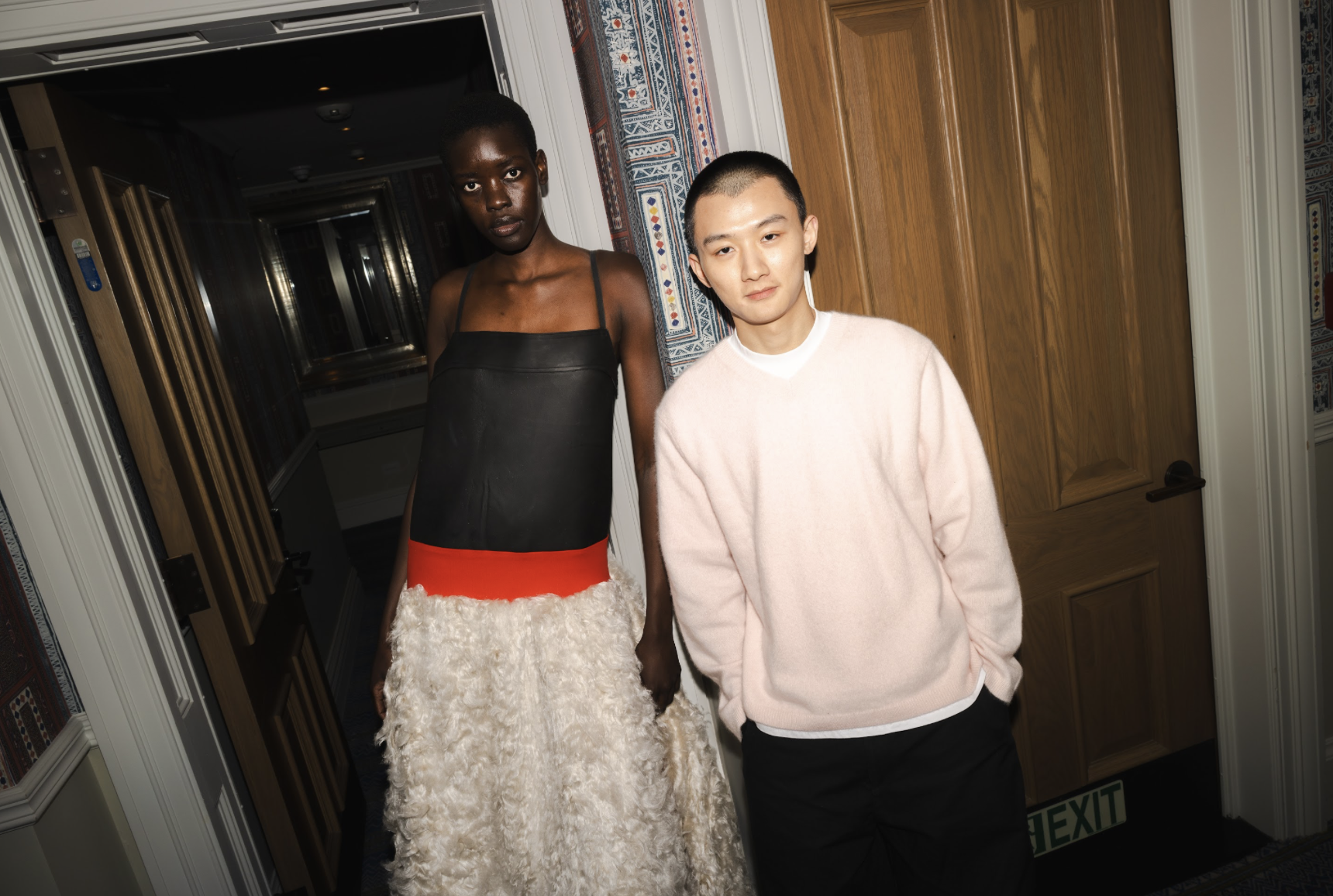
Winner: Zane Li of Lii
Material used: bio-leather latex from LaVeg/Amadeu, BioFluff’s Savian
Winning designer Zane Li of Lii made use of a bio-leather made from regeneratively collected latex from shiringa trees in the Amazon Rainforest. This material supports Indigenous communities, and is made by a range of companies including LaVeg/Amadeu (pictured) and Caxacori Studio. This material supports biodiversity rather than being tied to deforestation like animal-derived leather so often is, alongside circumnavigating entirely beyond the animal harms of leather as a co-product.
As an alternative to fur or shearling, as well as fossil fuel-derived replications, Savian’s BioFluff is used on the skirt of Li’s design, and is made with hemp and nettle.
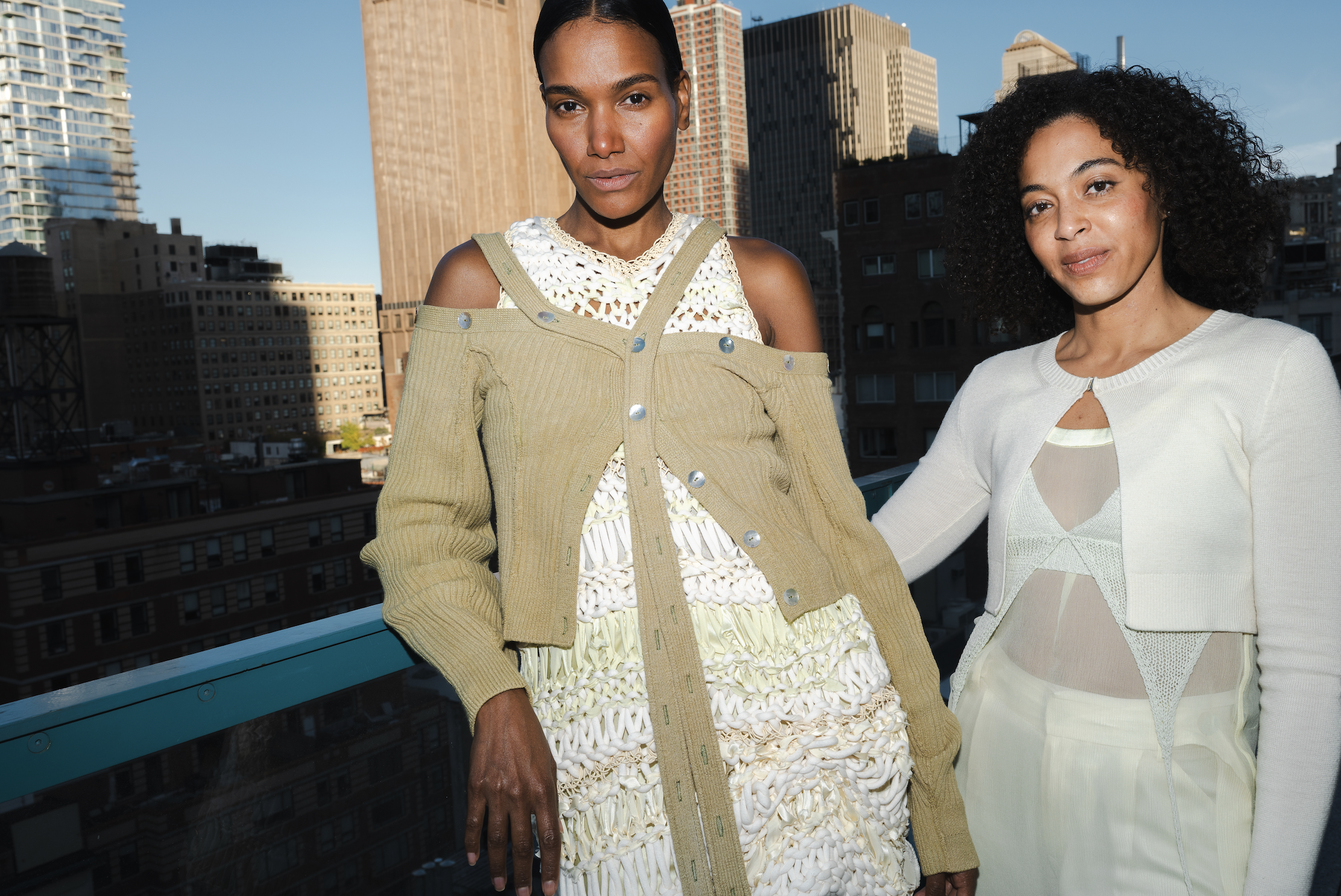
Runner up: Aisling Camps
Material used: Vegetable Cashmere from KDNY
The Vegetable Cashmere used in this knit and crochet look is made from soybean protein otherwise discarded in the production of soy milk and tofu. Created by KD New York, this is a New York designer making use of a New York bio-material innovation, which has a far reduced climate and other environmental impacts as compared to cashmere or wool, while also supporting a move beyond relying wholly on fossil fuel ‘alternatives’ to these high-methane, land intensive animal-derived materials that cause harm.
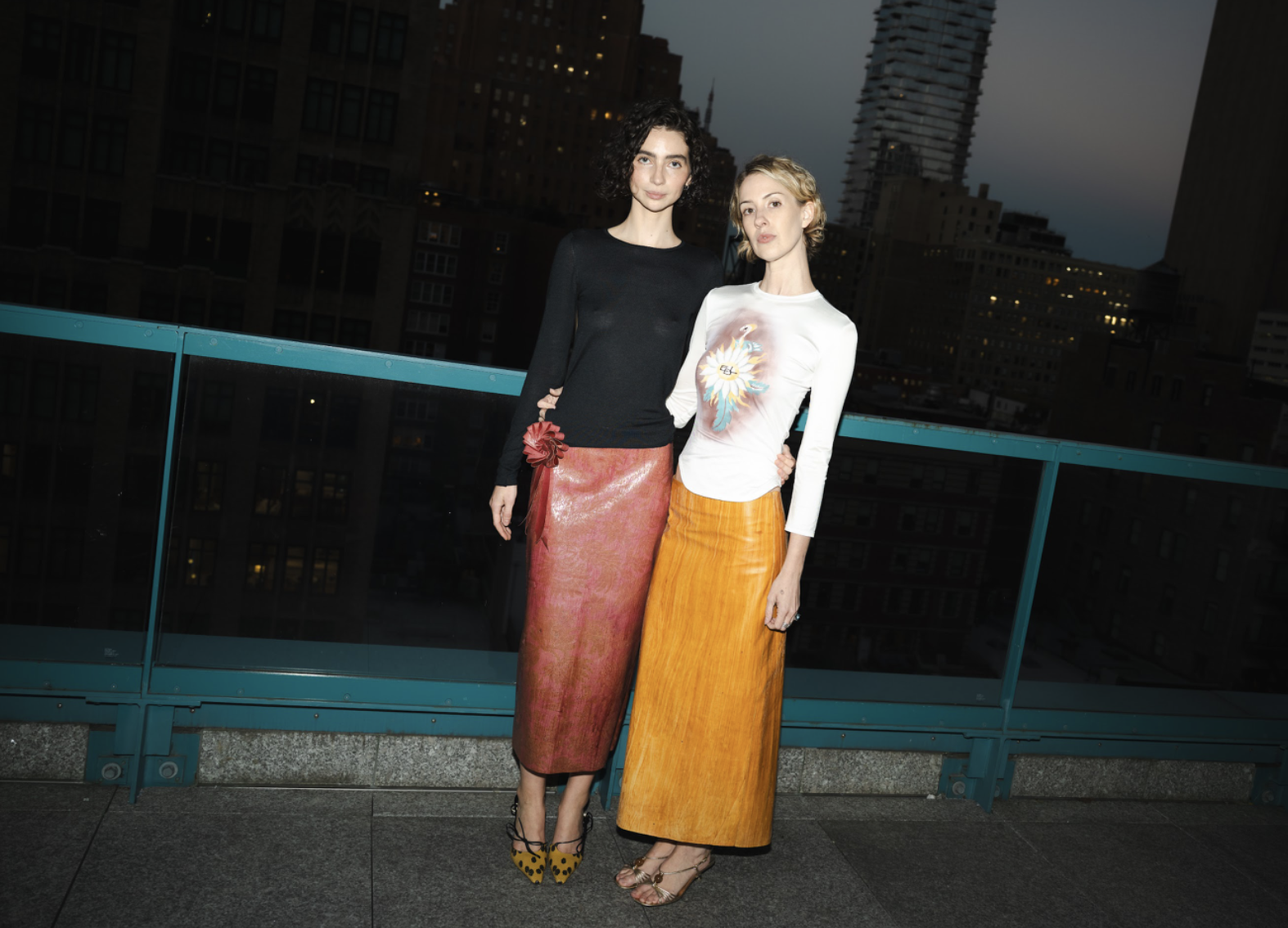
Runner up: Emily Dawn Long
Materials used: Bio-leather latex from LaVeg/Amadeu
These skirts highlight the unique properties of bio-leather made with shiringa trees, as seen in the texture and tones that can be achieved, often with natural dyes. The material is made by laminating the natural latex onto a woven plant-based backing, making the light material suitable for apparel pieces like these.
Amir Taghi
Materials used: Orange Fiber bio-silk, Uncaged Innovation’s bio-leather
Amir Taghi made us of bio-silk rather than conventional animal-derived silk, this time made with the cellulose and pulp typically discarded in the making of orange juice. This cellulosic material makes use of bio-waste, becoming soft and silky.
Meanwhile, American company Uncaged Innovation’s ELEVATE bio-leather is also used in this look, made with the protein extracted from grain otherwise wasted in brewing and other processes. These proteins can be made into a similar structure to collagen, which is what gives skins (leather) the structure, durability and flexibility designers often seek.

Zoe Gustavia Anna Whalen
Materials used: Orange Fiber and BioFluff
This look, combining orange-derived silk with BioFluff’s hemp and nettle fur showcases the diversity of animal-free and plastic-free materials now available to designers, expanding rather than limiting our creative capacity as a fashion industry.
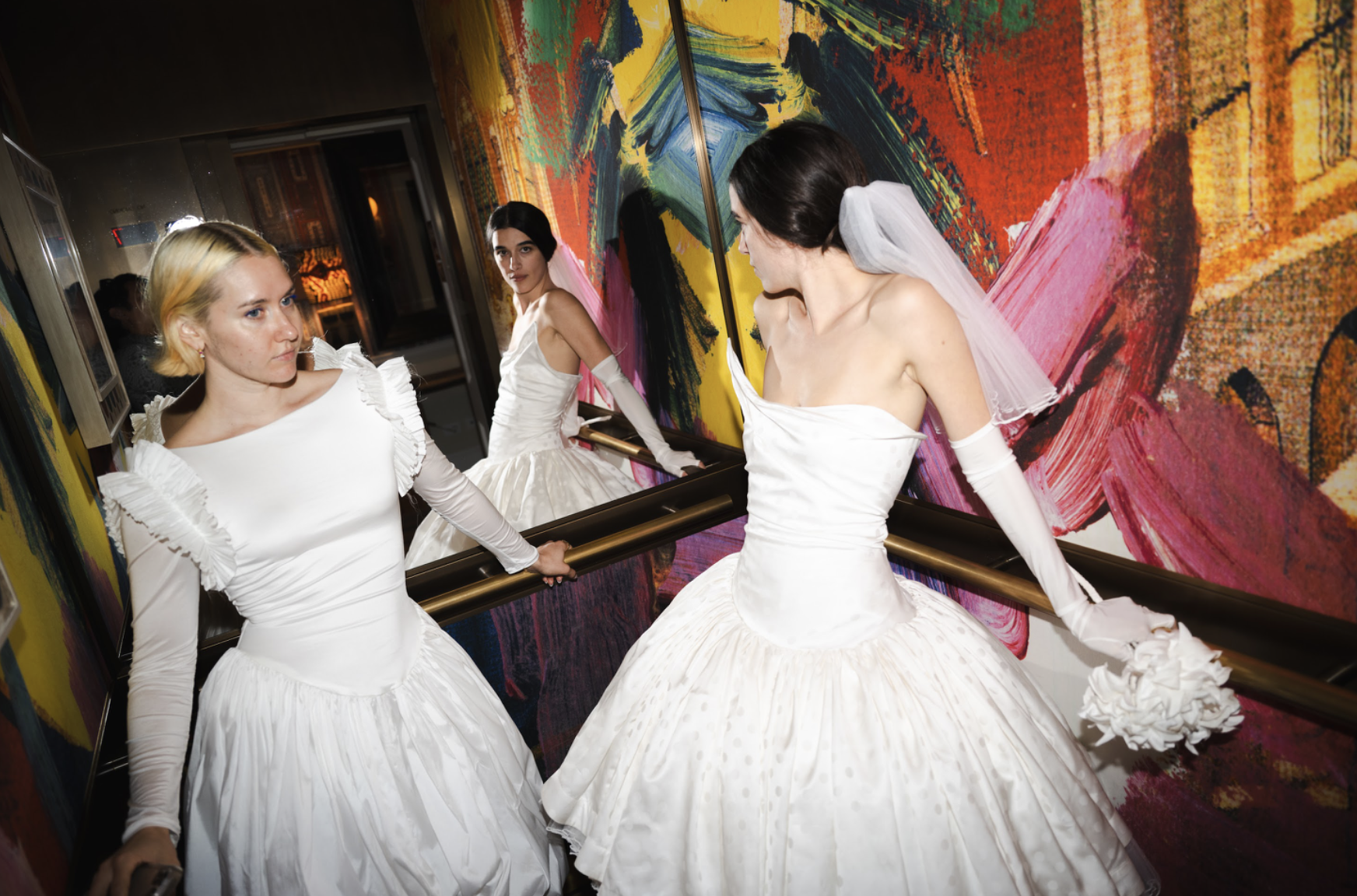
Miss Claire Sullivan
Materials used: Orange Fiber and Tencel cellulose silks
Claire Sullivan of Miss Claire Sullivan made use of two cellulosic materials, both from Orange Fiber and Tencel. Tencel is typically made from responsibly sourced wood cellulose, and produced in a closed-loop system with more responsible inputs as compared to the typically harsh chemical solvents used in making viscose and more conventional cellulose materials, which can also be associated with deforestation.