
Cornered, bagged and plucked with pliers: investigation shows ostrich feather ethics-washing
Imagery credit to World Animal Protection, from our collaborative report, Blood Feathers: read it at the end of the article.
A new investigation published by World Animal Protection, with findings shared in a report in partnership with Collective Fashion Justice, exposes the brutal reality behind fashion’s growing use of ostrich feathers.
The investigation uncovered widespread cruelty and exploitation, including painful live plucking under the guise of ‘natural moulting’ and ‘feather cutting’, making a lie of the claim that feathers are harmlessly shed and simply collected; a narrative believed by nearly half of UK consumers in recent polling.
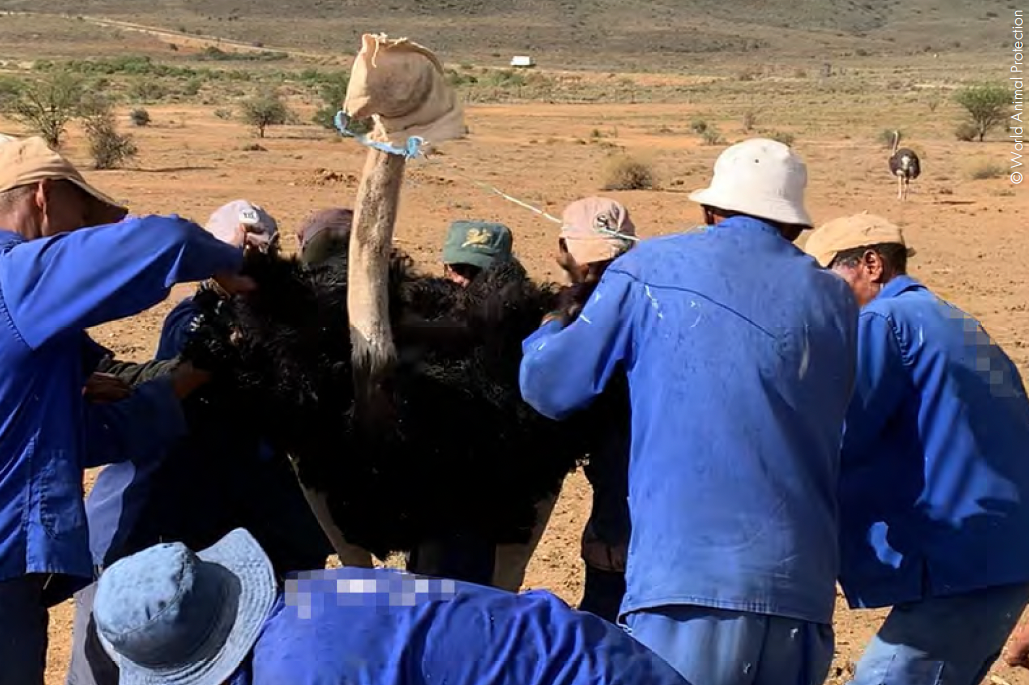
An ostrich being restrained for feather plucking. Bags are placed over their heads to render them more motionless as they attempt to fight against feather plucking and cutting.
Throughout 2024 and 2025 World Animal Protection and Collective Fashion Justice conducted desktop research into the ostrich feather industry and the fashion industry supply chain, confirming South Africa remains the dominant supplier of ostrich products globally. In 2026, World Animal Protection commissioned an on-the-ground investigation offering rare insight into South Africa’s ostrich feather farming industry. The aim was to understand the reality of the commercial ostrich feather farming industry as well as assessing the welfare of the ostriches kept on key farms supplying ostrich feathers to the global fashion industry.
Brands from SHEIN to Chanel and Dior were documented as in the supply network of farms investigated, showing that ostrich exploitation is the same from fast to luxury fashion.
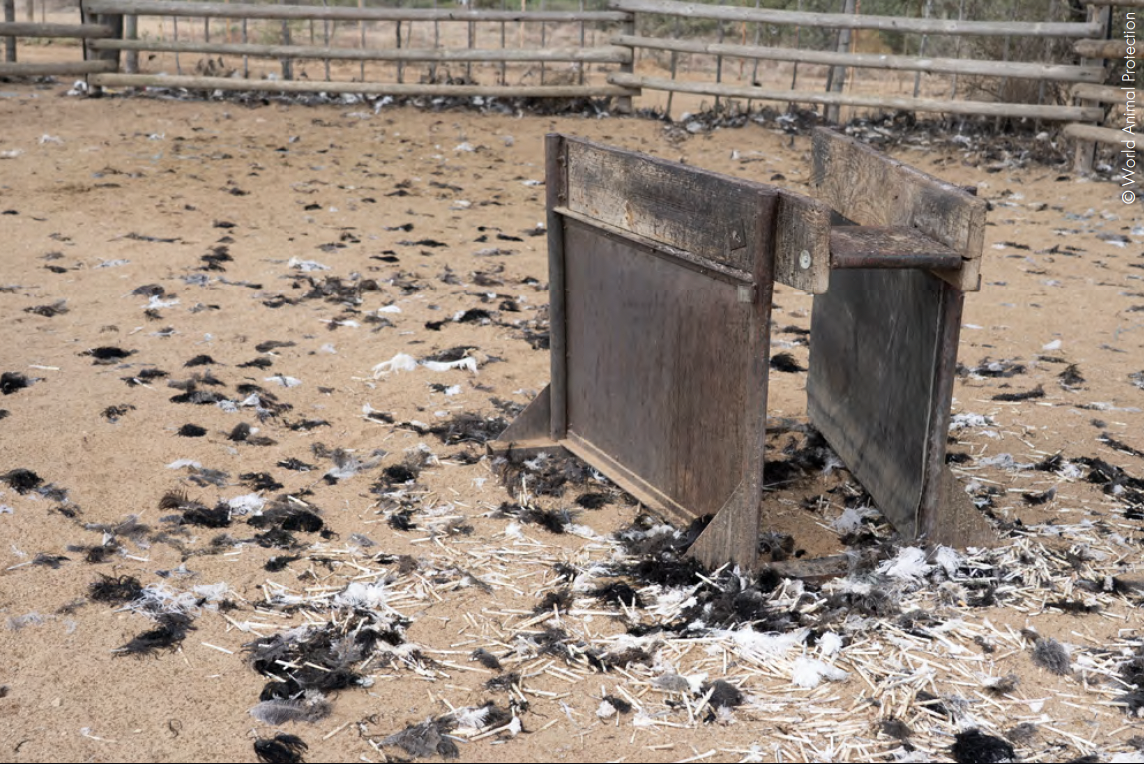
Birds are restrained in these metal containers during feather plucking and cutting.
Feather cutting and plucking
This investigation highlighted the widespread cruelty involved in feather harvesting. The report unpacks ongoing live plucking, as well as supposedly more ethical feather ‘cutting’. Here, ostriches have their feather cut above the bloodline with the remaining feather later pulled from the skin with pliers, rendering feather cutting the same as live plucking, but with more steps, and more man-handling involved. Furthermore, this investigation produced direct evidence showing numerous instances where blood was witnessed on the end of feathers during farm visits, exposing doubt on so-called ethical cutting practices.
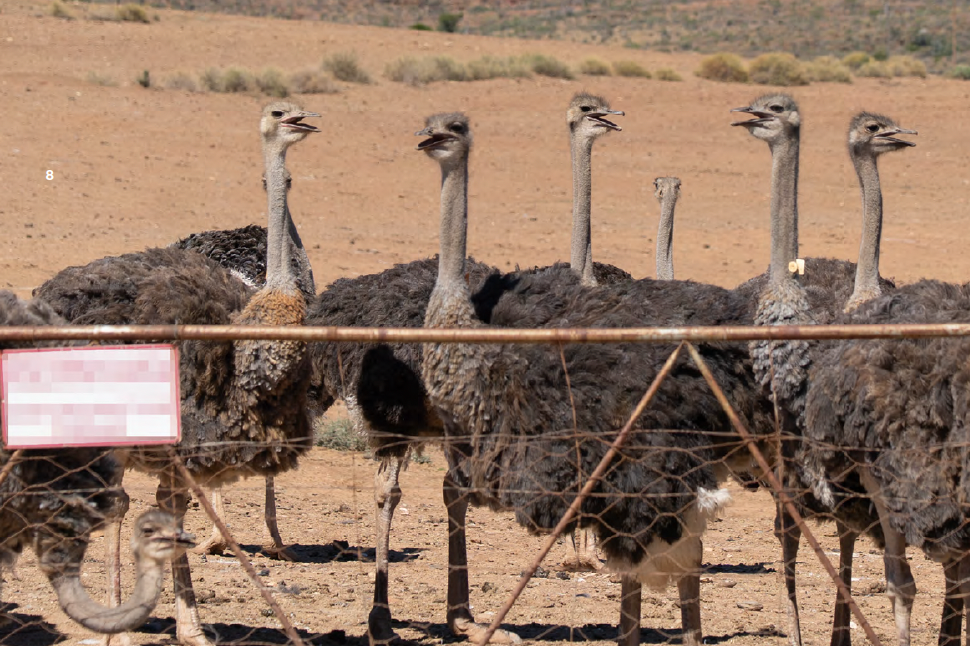
Feathers are a primary product, driving the rearing and slaughtering of birds
Ostrich feathers are a profitable primary product driving the industry’s existence. In the report and investigation, a major farm supplying Ostrich Products South Africa (75% of ostrich feathers are sourced from South Africa) confirmed feathers to be the most profitable part of the ostrich, explaining “the main product of the ostrich that makes the most money is the feathers. We export to all over Europe, to China and South America.”
Throughout the investigation, two main commercial farming systems were identified: those primarily focused on supplying feathers to the fashion industry, and those producing at a higher scale for skins, with feathers as another key driver of profit, with a minor portion of profit coming from meat.
Within those farms focused on supplying feathers, ostriches are kept alive to produce high-quality feathers for the luxury fashion industry, until their feather quality reduces and they are killed. Feather farms receive income from the sale of hatchlings, chicks, and the skin and meat of killed birds, however the primary income is gained through ostrich feather sale to the fashion industry.industry.
While a population of adult ostriches is maintained, ostriches within this farming system are typically slaughtered at 9–14 months, where 1kg of feathers are plucked from the animal before or after slaughter.
The fashion industry’s use of ostrich feathers is the primary driver for ostrich exploitation and slaughter, followed by skin use for the leather industry.
Ostriches are wild animals whose needs cannot be met in human-controlled, industrial conditions
Ostriches have not been farmed for so long, meaning they are not a domesticated species. As wild animals, they are used to running fast across long distances, foraging for their food, and engaging in social behaviours that are perverted in a farm feedlot system.
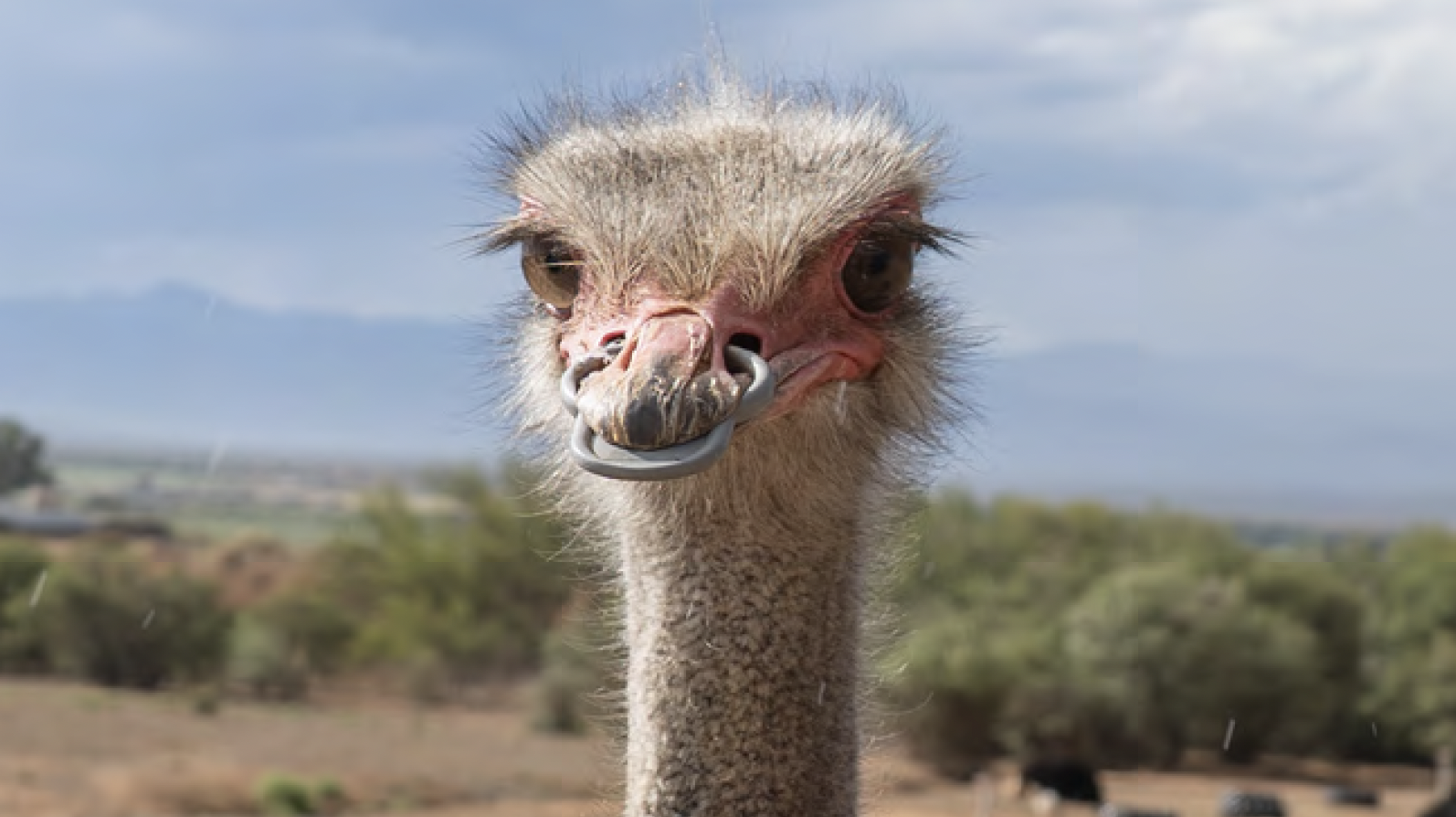
Ostriches in the investigation were documented displaying signs of psychological distress like repetitive head movements, fence biting, self mutilation, and pecking and attacking other birds. Instead of addressing the root issue behind these signs of distress — an inapproriate environment that cannot meet the welfare needs of the animals — the industry places uncomfortable beak guards on the birds, to reduce pecking-related injuries.
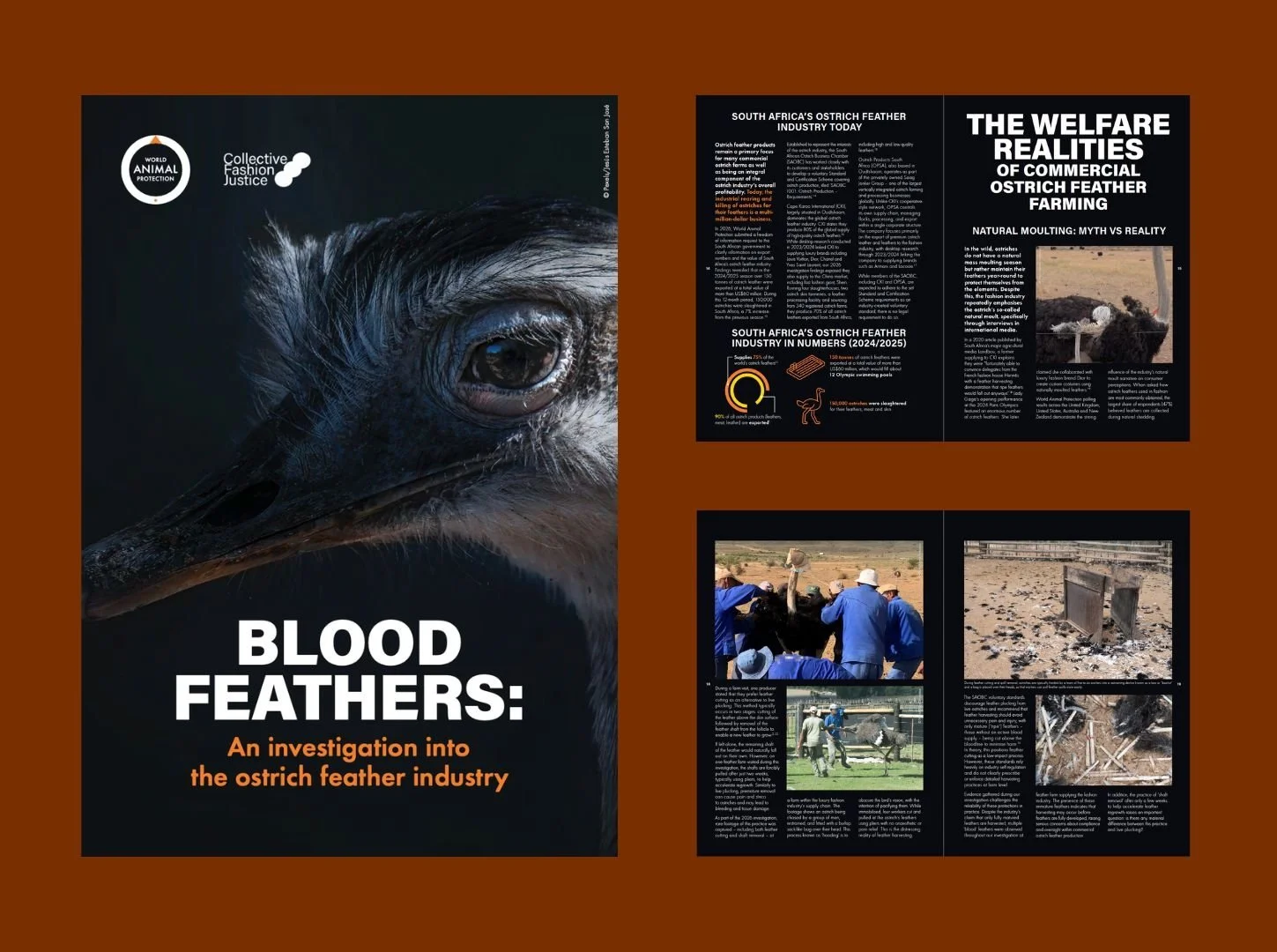
Learn more about ostrich feather sourcing: read our report
This report, below, also includes a table which outlines — as of September 2026 — the feather policies in place across fashion brands, retailers and councils. It explores public perceptions of feather use, legal and standard practices of the industry, economics, alternatives, and more.