
Credit: We Animals
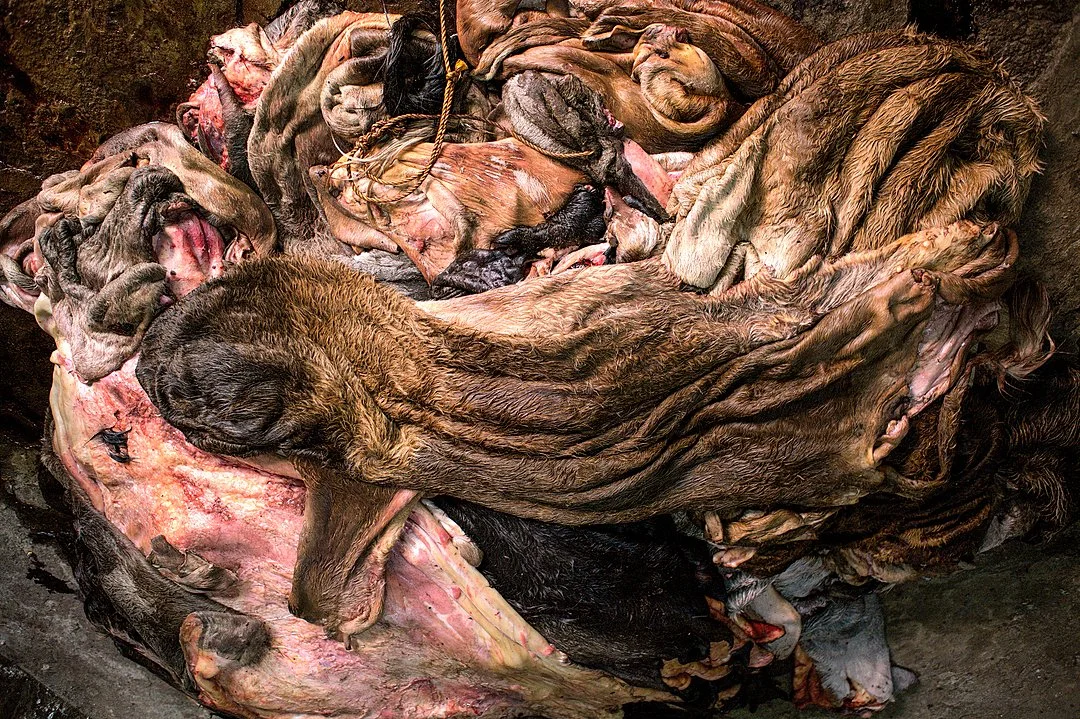
The fashion industry routinely defends animal-derived leather use by undermining leather’s value as a worthless by-product of meat and dairy production.
A new study published in ACS Sustainable Chemistry and Engineering transparently breaks down the legitimate amount of emissions that should be allocated to animal-derived leather, finding its footprint to be 70% greater than previously estimated.
The leather industry is far from a charitable recycling initiative, instead valued at hundreds of billions of dollars with hides generating an important revenue stream for cattle ranchers and slaughterhouses which operate on razor thin margins.
In a new paper published in ACS Sustainable Chemistry & Engineering, co-authors Mikaila K. Roncevich of Cornell University (also lead researcher of our methane footprint for the fashion industry from 2025) and Associate Professor of Environmental Studies at NYU, Dr. Matthew Hayek, find that key data points used by the leather and fashion industries to downplay leather’s climate impact rely on flawed geographical data sets. These compromise the legitimacy of emissions allocations being used.

First, how does emissions allocation work?
Most existing literature on leather’s climate footprint uses economic and biophysical allocation methods of carbon accounting. Here, the total emissions from rearing a cow are split and allocated across various co-products (such as leather) that come from a slaughtered cow, based on the relative biophysical and economic value of each. This is a common and legitimate allocation method. However, cattle in different regions of the world are reared for different purposes and products, generating varying economic revenues, and the GHG accounting methodologies to calculate these should take this variation into account. Right now, most leather industry pedalled data does not, skewing results.
Most leather industry emissions data relies on the EU’s Product Environmental Footprint Category Rules (PEFCR) for leather which uses European cattle farming data. However, most animal-derived leather used by the fashion industry is not European, and unlike in major leather production countries, the majority of European cattle herds are bred and reared to produce both milk and beef. As a result, there are more financially viable products to economically allocate emissions across (as compared to when looking at cattle raised only for meat and skins) , resulting in a smaller CO2e footprint for leather.
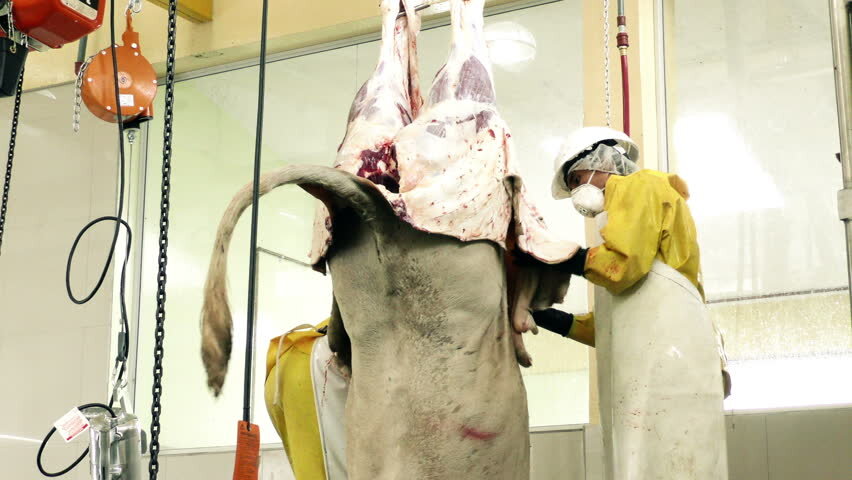
Inaccurate data has been used by the fashion industry, creating misunderstanding about leather’s true impact
Using the Europe-centric data and guidelines, 88% of emissions are allocated to dairy products, with only the remaining 12% allocated to the flesh and skin of the animal, with these split based on biophysical allocation. These guidelines suggest 3.5% of the emissions associated with the animal’s carcass should be allocated to the skin, based on economic value.
When dairy is removed from the equation, reflecting the reality of cattle rearing in top skin and leather production countries such as Brazil and the United States, 88% of the total emissions through biophysical allocation must be reallocated across the flesh, skin and other body parts of the animals.
In this new study, Roncevich and other researchers set out to find more representative geographic and economic data to recalculate an accurate GHG footprint for leather. In their research, the team used emissions data from the UN Food and Agriculture Organization (FAO) GLEAM 3 (Global Livestock Environmental Assessment Model version 3.0) methodology to more accurately reflect global cattle herds, their differing uses and economic values in different regions around the world, and how this should impact emissions allocations.
Using this UNFAO data as a globally weighted average, they found that a cow’s skin actually represents about 8.1% of the total value of the slaughtered animal. This significantly changes the allocation of emissions, resulting in a CO2e footprint that is 70% greater than past estimates which used data that inaccurately reflected the industries supplying fashion with skins for leather.
As such, the study also showed that cow skin leather emits more than 12 times as much as animal-free leathers made from a range of different materials such as next-generation fungi- andplant cellulose-based leathers as well as synthetics.

What’s next?
Ensuring regulatory standards and climate accounting guidelines use the most up to date, accurate and representative data to calculate greenhouse gas emissions for fashion’s materials is crucial. Without using the most up-to-date scientific data, we cannot most effectively mitigate the interlinked climate and biodiversity crises.
These findings come at a critical moment when the leather industry is lobbying for less regulatory oversight and accountability. Just this week (July 2026), the leather lobby successfully secured a complete exclusion from upcoming EU Deforestation Regulation. Skins will be the only bovine product which are not subject to regulation that would forbid the sale of deforestation-linked goods in the EU. This exemption was made based on an inaccurate and unscientific claim that leather is a by-product so worthless it should not be included in the regulation. This is simply untrue.
The fashion industry (and climate accounting companies working with them) is obliged to update their material emissions accounting systems with this new data, and make responsible decisions to reduce emissions accordingly.
Learn more about the leather industry in our report series, Under their skin.