In March, will the European Commission ban fur farming and related sales?
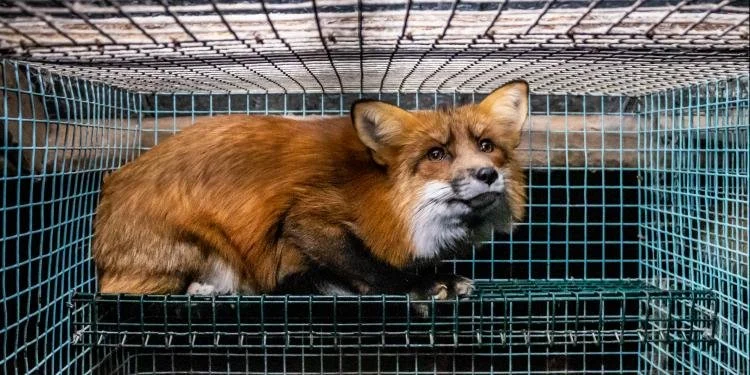
Image: A fox destined to be killed for fashion on a Finnish fur farm. From We Animals’ book, HIDDEN, shot by Kristo Muurimaa
The below is an extract from an article originally published on WWD, written by Rhonda Richford and featuring comments from our founding director, Emma Hakansson. It follows the short section below, where you can show your support for a Fur Free Europe ahead of the March decision, if you are based within the European Union.
Pieces of the fur industry has been falling like dominoes. In recent weeks, a quick succession of big announcements has underscored how narrow the runway has become, as well as highlighted that the European Union’s next move, slated for March, could be make-or-break for animal fur in fashion.
On Dec. 2, Poland, the world’s second-largest producer of animal fur behind China and Europe’s largest supplier, passed legislation to phase out fur farming by 2033. The next day, the Council of Fashion Designers of America said animal fur, whether farmed or trapped, will be prohibited on the official New York Fashion Week schedule starting in September.
Then it was Hearst Magazines, publisher of Elle, Harper’s Bazaar and Esquire in the United States, which announced a ban on fur in all editorial and advertising content, following a similar move earlier this year by Condé Nast titles including Vogue and Vanity Fair. A few days later, Rick Owens became the latest luxury designer to commit to going fur-free.
Poland’s decision is seen as a historic turning point for an industry already struggling. Global fur exports have fallen from a peak of $14.7 billion in 2013 to about $3.4 billion in 2023, driven by declining consumer demand and intensifying scrutiny over animal welfare. In Poland alone, mink fur exports collapsed from 402 million euros in 2015 to 71 million euros in 2024.
That backdrop helps explain why attention is now focused on Brussels’ next move.
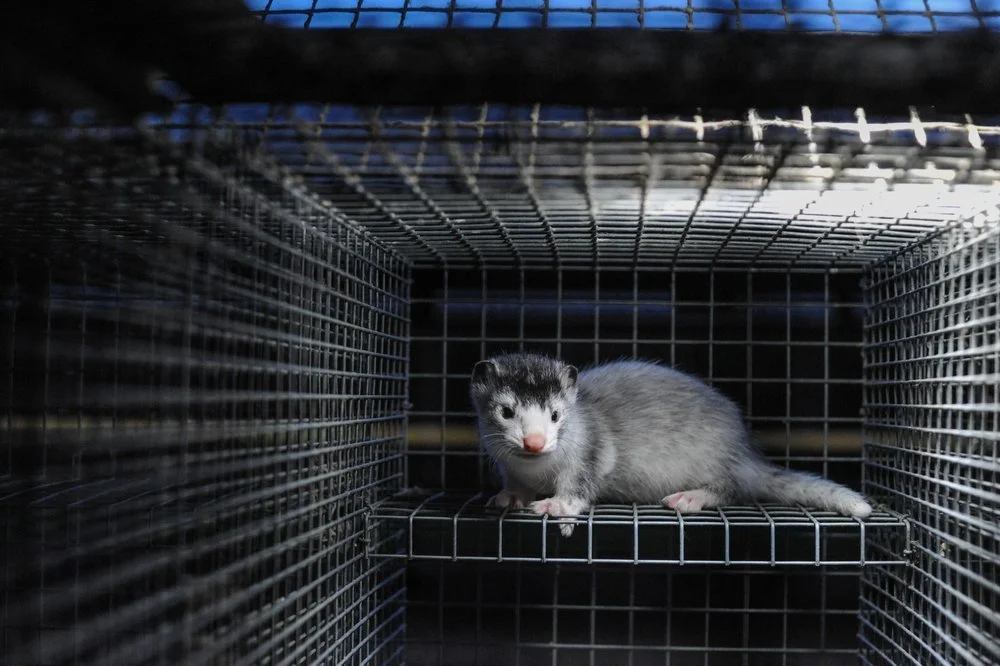
A mink confined to the same cage they will live until they are killed for their fur. Sweden. Jo-Ann McArthur for We Animals
In March, the European Commission is expected to publish its formal policy response to the “Fur Free Europe” European Citizens’ Initiative, which gathered more than 1.5 million signatures and triggered a requirement for the commission to publicly state a position.
The options remain broad. The commission could propose a ban on fur farming, a ban on the sale of fur and fur products from farmed animals — or both.
“It’s wide open,” said Delcianna Winders, director of the Animal Law and Policy Institute at Vermont Law and Graduate School.
Twenty-four EU member states now have full or partial bans on fur production, and Poland’s phase-out makes it the 18th country in the bloc to fully prohibit fur farming, continuing the erosion of Europe’s role as a global production hub.
The commission’s decision is expected to be shaped by the European Food Safety Authority’s opinion paper, released last July, the findings of which are widely viewed as a significant challenge to the industry’s claim that fur farming can be made compatible with modern welfare standards.
“The focus in the EU is more explicitly considering animal welfare as a priority and recognizing that it is intertwined with zoonotic [disease] concerns and environmental concerns,” said Winders. Poland’s decision “is a huge sign. It’s very clear what the direction is. Really it’s just a question of how quickly the EU, the U.S. and other jurisdictions enact bans.”
Winders believes a bloc-wide EU ban could be in place within five years, with the U.S. potentially following within a decade. Switzerland has already enacted a ban on the sale of fur, as has California.
Fashion institutions are already acting as de facto regulators. The CFDA’s decision to ban fur at New York Fashion Week follows years of engagement with Humane World for Animals and Collective Fashion Justice. Emma Håkansson, founding director of Collective Fashion Justice who worked with the CFDA and the British Fashion Council on their bans, said there was little resistance from major fashion players.
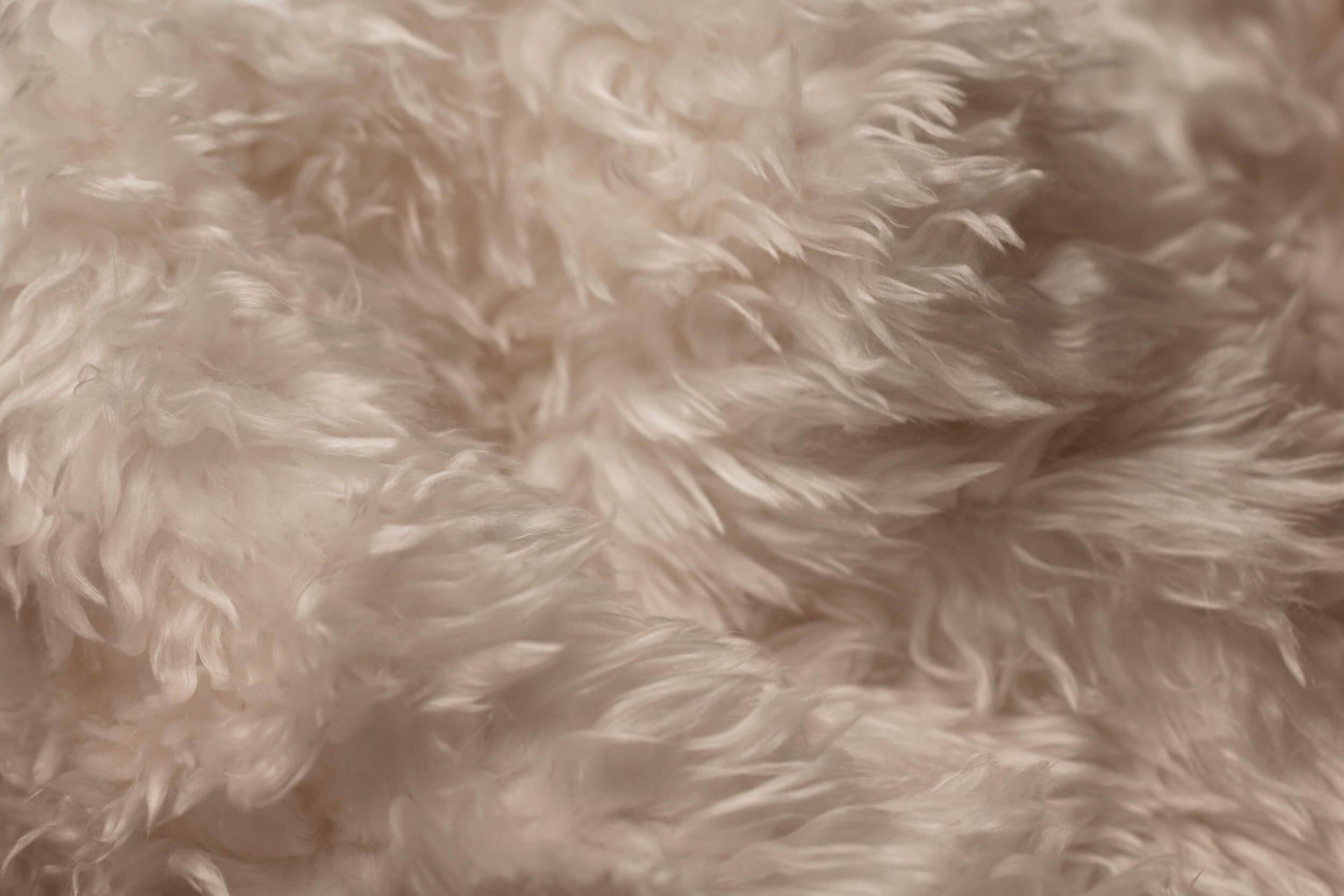
Savian’s BioFluff, made from hemp and nettle, not animals or plastics.
“Overall, I think people accept that this is where we are now,” she said. “There’s also this real sense, universally across every fashion council we speak to, that they feel they have less power than they really do. There’s a tension — you have to represent the members, but you are also there to lead the members.”
Whether Milan and Paris will follow New York and London remains an open question. Collective Fashion Justice has been in dialogue with Italy’s Camera della Moda, while engagement with France’s Fédération de la Haute Couture et de la Mode has been more limited, and the FHCM had no comment when contacted by WWD about their next possible move.
Italy and France are home to some of the last major luxury houses still using animal fur, notably Fendi and Louis Vuitton, both owned by LVMH Moët Hennessy Louis Vuitton, which donated 300,000 euros to the International Fur Federation in 2024.
“The International Fur Federation is aware that farmed fur is obviously in decline and will continue to decline,” said Håkansson, adding that the industry is increasingly trying to reframe fur from trapped wild animals as a more “ethical” alternative, though without merit. “There’s greater biodiversity risks. It’s impossible to regulate from a welfare perspective. And it doesn’t change the fact that we’re killing animals just for fashion,” she claimed.
In addition, both farmed and trapped fur is treated with chromates and other preservatives to make it more durable, rendering it not biodegradable.
Brands have turned to faux fur en masse (see last year’s fluffy-coated “Mob Wife” trend) which raises its own sustainability questions. While mink fur and other animal furs carry a significant climate footprint, particularly from methane emissions, petroleum-based synthetic furs raise different concerns. But there are new bio-based alternatives that are of growing interest to fashion brands.
For campaigners, fur may only be the beginning. “I’m really keen for new policies now to be about wild animal skins too,” said Håkansson, noting that the ethical logic underpinning for fur bans applies equally to crocodiles, alligators, ostriches and snakes. “The only difference is that maybe those species are a little harder to connect to because they’re a bit more scary looking. That’s not really a good reason.”